
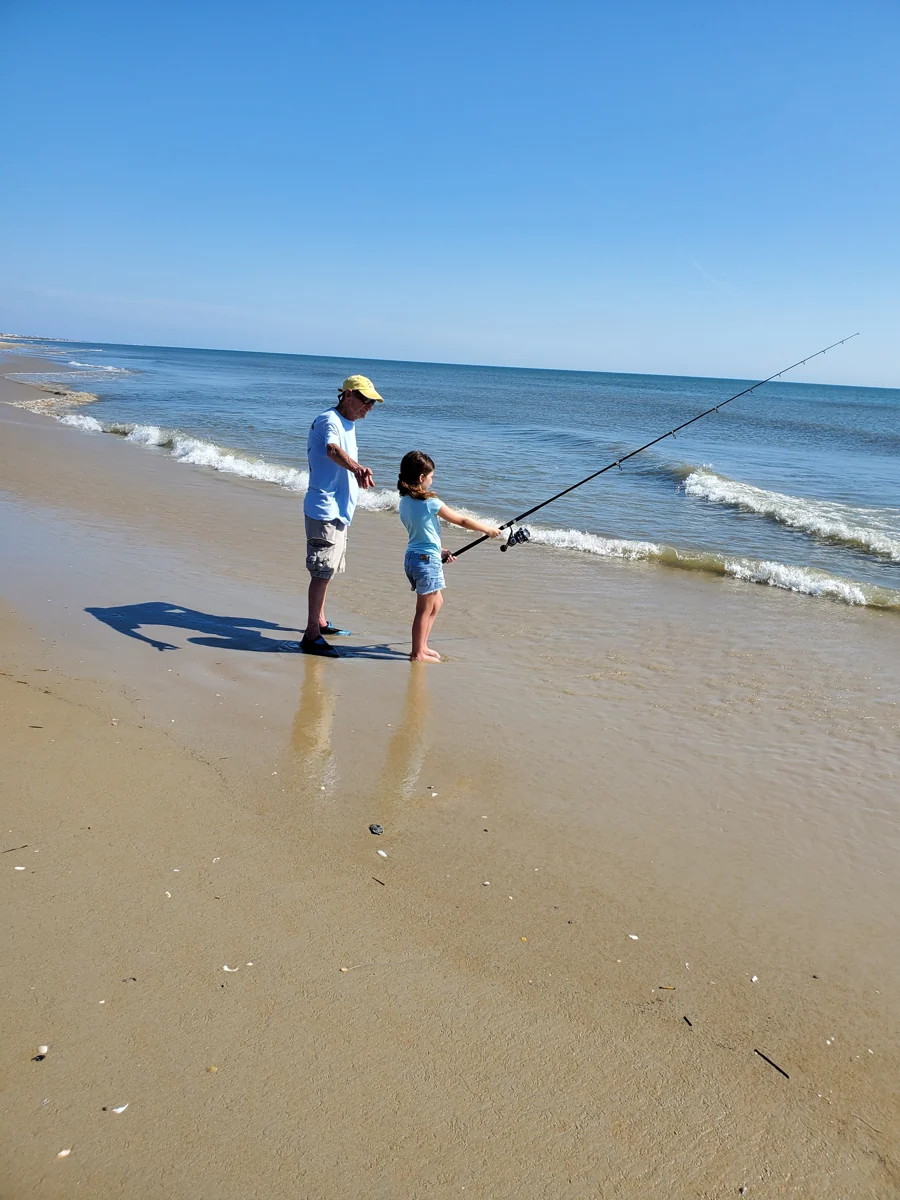
A first saltwater fishing trip goes more smoothly when the location leads the shopping list. Standing on a pier and casting from sand are different jobs: the distance to the water, room for a cast and method of landing a fish all change. Start with one setting and a manageable session, then buy additional equipment after you know what you actually need.
Decide between a pier and the surf
For a first visit, consider the Little Island Fishing Pier in Sandbridge. A defined fishing structure makes it easier to inspect the available space before setting up. Confirm its current opening schedule and charges, then ask staff about tackle restrictions and how anglers land larger fish from the pier.
Surf fishing adds a walk across sand and a moving waterline. Before unloading, identify the permitted fishing area and a route back to the car. At Little Island, the city directs surf fishing toward the southern park boundary and prohibits beach fishing within 200 yards of the pier. Seasonal restrictions affect parts of the city’s beaches; check the official beach rules for your exact location and time.
For an introductory trip, choose a place where you can cast from dry, stable ground. Do not make wading or climbing rocks part of the learning curve.
Match one outfit to the place
Tell a tackle shop where you will fish, whether you will use bait or lures, and that you are learning. Ask for a rod, reel, line and rig that work together. The rod’s printed weight range matters: the total load being cast includes the rig, sinker and bait. A heavy sinker is not a solution if the rod is not designed to cast it.
Skip the temptation to buy several specialized rods immediately. Practice tying the recommended knot and operating the reel before the trip. If you use circle hooks, learn the technique: VMRC advises against the hard backward hook-set used with some other hooks. Its circle-hook guidance also explains the requirement when recreationally fishing for striped bass with live or chunk bait.
- Fishing essentials: one suitable outfit, spare terminal tackle, bait or lures, pliers, line cutters and a measuring tool.
- Personal essentials: water, sun protection, secure footwear and a charged phone.
- For the setting: a way to keep gear out of sand, and a landing method appropriate to the pier if needed.
- For cleanup: a sealable container or bag for hooks, scraps of line and used packaging.
Sort out the license before casting
Under VMRC’s saltwater licensing rules, most anglers ages 16–64 need a paid saltwater license unless an exemption applies. A licensed public fishing pier may cover its customers; that coverage does not follow you onto an adjacent beach.
When an exemption applies, anglers age 16 and older generally need free annual Fisherman Identification Program registration. A valid paid Virginia saltwater license removes that separate registration step. Check your own circumstances and save the documentation where you can retrieve it.
Plan for weather and the fish you catch
Read the National Weather Service Wakefield forecast before leaving, including coastal hazards. A pleasant temperature does not establish safe surf conditions. Give other anglers room, check behind you before every cast, and keep loose hooks away from walkways.
At thunder, leave for a substantial building or an enclosed, hard-topped metal vehicle with the windows closed. NWS says open picnic shelters are not safe lightning shelter and recommends waiting 30 minutes after the last thunder before returning.
Before the first cast, open VMRC’s current species regulations. Identify a fish and confirm its season, size and possession limits before deciding to keep it. A measuring tool and accessible rules are more useful than guessing from a neighboring angler’s catch.
Official sources
Checked October 27, 2026. Use the linked regulations and facility notices for updates.