
A good camping weekend starts with matching the campground to the people going. Around Virginia Beach, four state parks offer very different trips: a city beach base at First Landing, an Eastern Shore stay at Kiptopeke, a James River countryside visit at Chippokes, and a self-supported outing at False Cape. These are practical trip-planning comparisons, not promises about available campsites.
First Landing: keep the first trip close
At 2500 Shore Drive in Virginia Beach, First Landing offers tent sites and sites with water and electricity, plus bathhouses with hot showers. Its Chesapeake Bay beach and trail network let a family build a weekend around the park while retaining the option of a short outing elsewhere in the city. The campground is on the Bay side of Shore Drive; use the park map to distinguish it from the trails and other entrances. First Landing park details.
Our practical pick for a first tent trip: choose a site that fits your actual tent footprint, locate the bathhouse before booking, and leave the first afternoon unscheduled. A campsite with electricity can be convenient, but it does not replace suitable sleeping gear. Swimming at First Landing is unguarded; being beside the Bay does not make the water a supervised activity.
For an Oceanfront-side day out, First Landing’s 64th Street entrance reaches the southern trail network. Campers should still follow the Shore Drive campground check-in directions. The park’s Cape Henry Trail links woodland and marsh scenery; use the trail guide to select a manageable section and include the return distance.
Kiptopeke: make the Eastern Shore the destination
Kiptopeke, at 3540 Kiptopeke Drive near Cape Charles, suits campers who want their overnight stay to anchor an Eastern Shore visit. The park lists tent-only sites without hookups, electric-and-water sites, and selected sites with sewer service. Tent sites are shaded and near bathhouses. Check the individual site description: a campground offering sewer connections does not mean every site has one. Kiptopeke park details.
Think through the whole journey from South Hampton Roads, including the Chesapeake Bay Bridge-Tunnel, instead of judging the trip by mileage alone. For a short stay, pick one main activity and spend the rest of the time at camp. Packing up the campsite to chase a long list of stops can erase the relaxation you came for.
For a walk close to camp, consider Baywoods Trail and the boardwalks linking Kiptopeke’s upland woods with its southern beach. A separate Cape Charles stop is the Natural Area Preserve at 301 Patrick Henry Avenue, where a boardwalk ends at a Bay overlook. That preserve has no public beach access or on-site facilities; plan it as a nature walk.
Chippokes: compare the two campground loops
Chippokes, at 695 Chippokes Park Road in Surry, combines camping with a historic farm setting, trails and James River scenery. Its campground layout matters. Loop A has shadier sites, but the park notes that many are not level. Loop B offers longer, paved, level sites with less shade. Review the official campsite photographs rather than assuming that all spaces in one campground feel alike. Chippokes park details.
This is a useful choice for a family that wants a countryside weekend with some history alongside outdoor time. Choose the route before departure and allow room in the schedule for regional traffic. A tent family and a family towing a long trailer may reasonably select different loops.
False Cape: plan it as a separate level of trip
False Cape has primitive camping and no public vehicle access. The park specifically advises against camping there with young children or inexperienced campers. Overnight visitors need a workable plan for carrying gear, drinking water, sanitation, weather, access and the return journey; reservations are made by calling Virginia State Parks. False Cape camping and access instructions.
Season matters. Back Bay National Wildlife Refuge closes its interior dike trails November 1 through March 31, leaving beach access for hikers and cyclists. Campers park at Little Island City Park, not the refuge lot. Check both agencies before committing, including tide and refuge-access restrictions. A beach hike with overnight equipment is a different undertaking from driving to a tent pad. Back Bay visitor rules.
Before reserving
Confirm campground season, equipment limits, current alerts and cancellation terms directly with the park. First Landing is our practical starting point for keeping a first Virginia Beach trip simple; Kiptopeke and Chippokes reward a more deliberate regional getaway. Save False Cape for campers prepared for its access and self-sufficiency requirements.
Official sources checked October 27, 2026:First Landing; Kiptopeke; Chippokes; False Cape; Back Bay National Wildlife Refuge. Recheck alerts and reservation details before travel.
Photo details and license
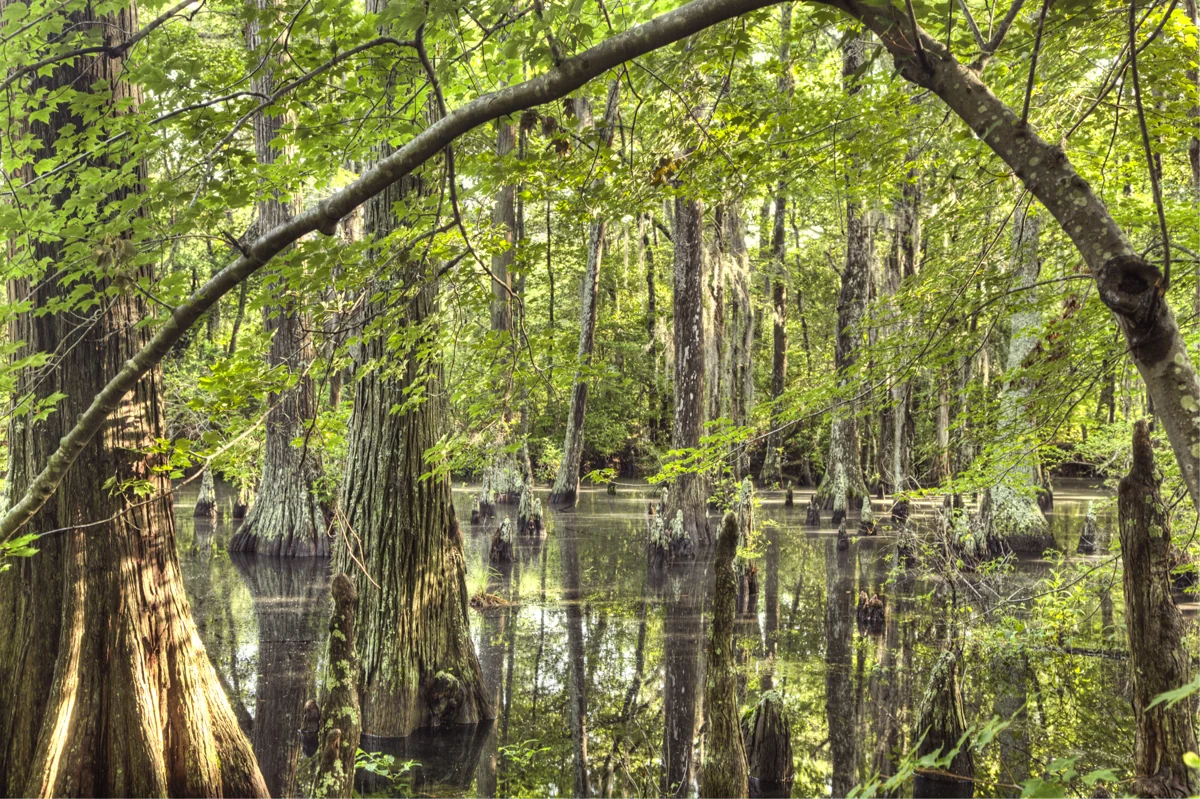
First Landing State Park cypress swamp: Angela Pan, CC BY 2.0. Resized and converted to WebP.