
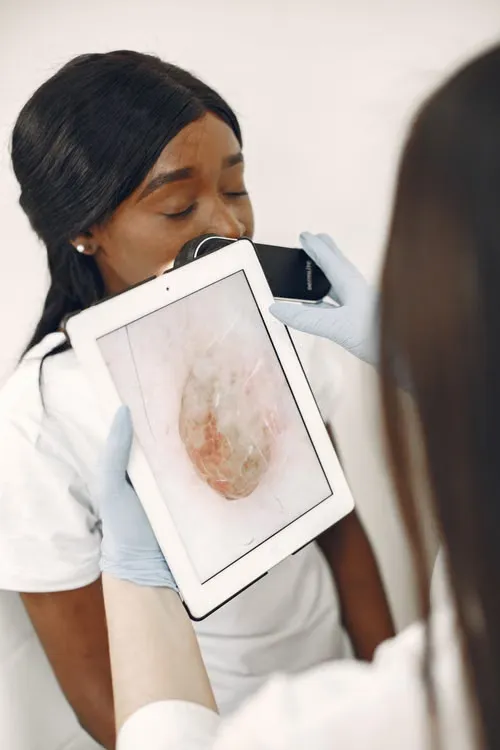
A dermatology appointment is easier to use well when you can explain what changed, what you have already tried and what you need help deciding. A short set of notes is enough. This guide organizes the visit into three jobs: book the right appointment, give the clinician a useful history, and leave with a clear follow-up plan.
When booking: describe the concern, not a diagnosis
Give the office one plain-language sentence about the main issue and say whether the patient is an adult or child. A medical skin concern, hair or nail problem and cosmetic treatment may use different appointments. Ask which clinician will see you, which office provides that service and whether records or an insurance referral are needed.
If a spot is growing, changing or bleeding, tell the office when seeking an appointment and ask the clinical team how promptly it should be assessed. If the concern changes while you wait, contact the team again. Do not use a public comment or newsletter form to request clinical advice.
Our local dermatology guide links to official Southside and pediatric service pages, a regional dermatologist search and Virginia’s license lookup. For any appointment, verify the clinician and office with your insurer instead of assuming a familiar practice name establishes coverage.
Prepare one page of useful information
Keep a few headings in a notebook or on your phone. Prioritize what will help you describe the concern, rather than trying to research your own diagnosis.
- What happened: where the problem began, approximately when, how it has changed and what makes it difficult in everyday life.
- What you have tried: names of medicines and skin, hair or nail products; when you used them; and what happened afterward.
- Background: current medicines and supplements, allergies, previous skin diagnoses, relevant procedures and family history you know.
- Your priorities: the two or three questions you most want answered. Put the concern that prompted the appointment first.
Ask the practice whether it wants previous pathology reports or treatment records and where they should be sent. Bring product names or packaging information if helpful; you do not need to arrive with a bag of purchases. Follow the office’s preparation instructions for the examination you have booked.
If the problem comes and goes
Dated photographs can help show what was visible at another time. Ask the practice how to send them securely and how it wants them taken. Keep the originals and note the date and location on the body. A photo supports the discussion; the clinician decides what examination or testing is needed.
For telemedicine, confirm the connection method, choose a private, well-lit space and test your device. Ask what happens if an in-person examination is needed and how follow-up will work. Use the practice’s recommended channel for images and personal information.
At the appointment: understand the next step
After describing your main concern, ask what the clinician thinks is happening, what remains uncertain and what would help resolve it. If treatment is proposed, ask its purpose, how you should use it, what changes to watch for and when the plan should be reviewed. If cost or fitting the plan around work is a problem, say so while alternatives can be discussed.
A skin biopsy removes a sample for examination and can help diagnose several kinds of skin conditions; being offered one does not itself mean you have cancer. If a biopsy is proposed, ask what question it will answer, whether it is planned for that visit, and how the result could change care.
For an aesthetic treatment, explain your goal and ask about the provider’s experience with the procedure and your skin tone, realistic limitations, risks, alternatives and the proposed number of sessions. Request the full estimate and aftercare arrangements before reserving a course of treatment.
Before leaving: complete the follow-up record
Use this short record so that “wait for a call” becomes a plan you can follow:
- Today’s plan: what was discussed, prescribed, tested or performed, and any written instructions to keep.
- Results: the expected timeframe and delivery method, the office responsible for explaining them, and whom to contact if they have not arrived.
- Care at home: instructions specific to your treatment or procedure, which changes should prompt contact, and how to reach the team.
- Next visit: its purpose, location and booking arrangements, including any referral or records still needed.
Describe real-life details such as outdoor work, swimming, helmets or protective equipment and ask how they fit the plan. Do not infer a universal recovery timetable or skin-check schedule from another person’s experience. Before ending the visit, repeat the next step in your own words and clarify anything you could not explain at home.
Explore local dermatology access and credential tools on CVA →
By CVA Editorial. Checked October 29, 2026. General visit preparation; individual advice comes from your clinician. Source checks: AAD guidance on appointments, telemedicine preparation, skin biopsy and cosmetic consultations.